
For years, New York’s land-based gambling market felt strangely unfinished. The state had money flowing through racinos, upstate commercial casinos, lottery terminals, and online betting, yet the country’s biggest city still lacked a true casino floor with live table games. That changed in two decisive steps: the New York State Gaming Commission licensed Resorts World New York City as a commercial casino on December 15, 2025, and the property opened live table games on April 28, 2026. In practical terms, that means New York City has moved from a restricted machine-led model to a genuine full-casino offer inside the five boroughs.
That shift matters far beyond one building in Queens. Resorts World was not launched as a speculative greenfield project that needed years to find an audience. It already operated at Aqueduct as a major gaming venue, and official state materials described it as a property with nearly $1 billion in annual gross gaming revenue before the full commercial conversion. State documents also note that the venue had already contributed more than $4.5 billion to the New York Education Fund since 2011, which meant the expansion entered 2026 with brand familiarity, infrastructure, and a proven customer base rather than a cold start.
The result is a rare market event: not just a new casino, but a structural upgrade to an existing high-volume gambling hub. That is why Resorts World is changing the offline market so quickly. It is not asking New Yorkers to discover casino gaming from scratch. It is taking an established flow of local visitation and converting part of that demand into higher-value, longer-stay, broader-spend activity.
Why this opening matters more than a normal launch
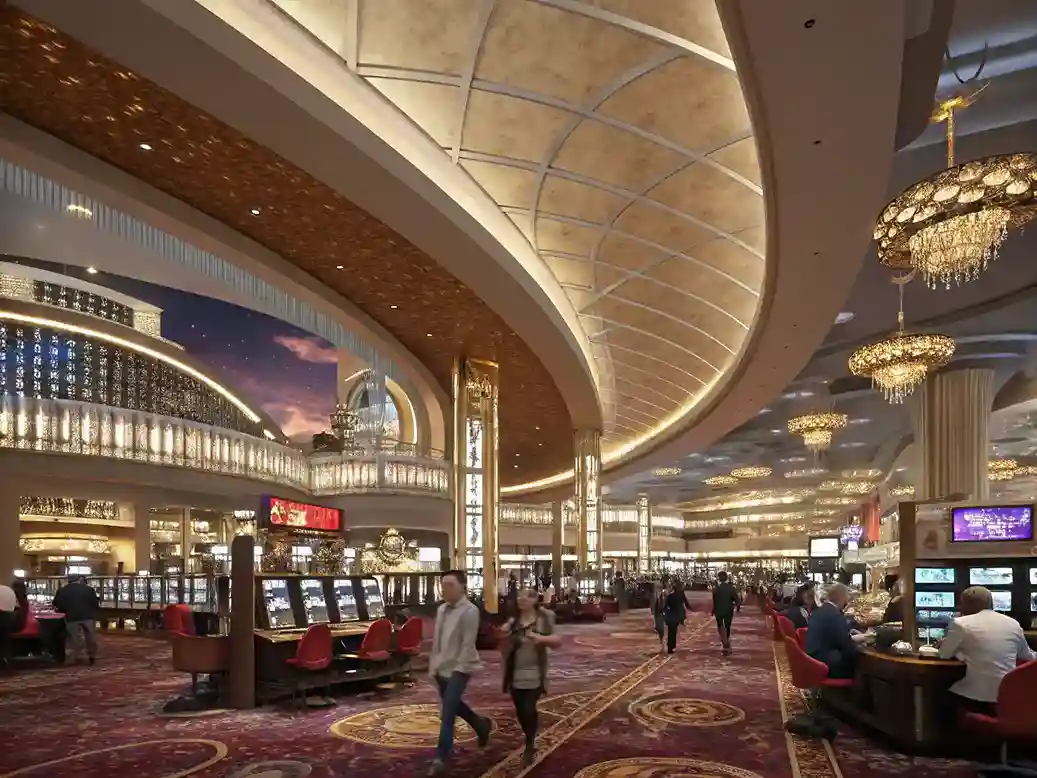
A typical casino opening is judged by ribbon-cutting optics, celebrity photos, and the size of the first weekend crowd. Resorts World New York City is more important than that because it closes a long-standing gap in the state’s gambling map. Before April 28, 2026, New York City had gambling venues, but not a full-fledged casino with live dealer table games. Upstate New York had full commercial casinos, and the city had racino-style properties, yet the most densely populated urban market in the state still lacked the form of gaming most people associate with a real casino experience.
That distinction changes consumer behavior. Slot and VLT-heavy venues attract volume, repeat visits, and convenience play, but table games add a different emotional and commercial layer. They extend time on property, create social energy on the floor, support premium play, and lift the venue’s identity from transactional gambling hall to broader entertainment destination. Resorts World opened with more than 240 live table games and over 2,500 slot machines, instantly giving New York City a product mix that can compete more directly with mature regional casino markets.
It also matters because this was the fastest route to a real casino in the city. Unlike other licensed projects that still need years of development, Resorts World could convert existing infrastructure at Aqueduct and begin operating live tables only a few months after final state approval. NY1 reported that the opening came just over four months after the Gaming Commission approved the new licenses, while the broader buildout is scheduled to continue through 2029. That speed gives Resorts World a first-mover advantage in the largest urban gambling market in the country.
The first-mover effect is not only symbolic. In gambling, the earliest full-service operator in a major city gets a chance to define habits. It captures corporate curiosity, tourist footfall, media attention, premium customer recruitment, and the loyalty of locals who previously had to travel for a fuller casino experience. Once those routines settle, later entrants must spend heavily to break them. Resorts World’s biggest win may be that it reaches the market while rivals are still preparing construction, staffing, and launch strategies.
How Resorts World changes the economics of the local casino floor
The most immediate market effect is simple: more of New York’s gambling spend can now stay in New York City. For years, part of the demand for blackjack, roulette, baccarat, and craps had to leak elsewhere, whether to upstate casinos, nearby states, or illegal options. Once live tables opened in Queens, the city stopped functioning as a feeder market and began behaving like a destination market in its own right.
The economics of that shift are powerful because Resorts World is not moving from zero. According to New York State Gaming Commission reporting, the legacy machine-based business at the property was already producing very large monthly handle and revenue totals before the April 2026 conversion. State reporting also notes that the VLT facility ceased operations on April 27, 2026 and commercial casino operations began on April 28, 2026, showing a direct handoff from a restricted format to a broader, more valuable casino model.
Before looking at the broader implications, it helps to see the transition in one place.
| Metric | Before full casino conversion | After full casino opening |
|---|---|---|
| Legal status | VLT/racino-style operation | Licensed commercial casino |
| Key date | VLT operations ended April 27, 2026 | Live table games opened April 28, 2026 |
| Core product | Machine-led gaming | 240+ live table games plus 2,500+ slots |
| Development profile | High-volume existing venue | First full casino in NYC with broader resort pipeline |
| Reported long-term plan | Existing Aqueduct footprint | $5.5B expansion with hotel, dining, arena, and green space |
What this table really shows is the quality of revenue changing, not just the quantity of gaming positions. A machine-only or machine-dominant venue can be enormously profitable, but a full casino has more ways to monetize attention. Table games attract different player profiles, support VIP development, create stronger nightlife pull, and raise the value of non-gaming amenities like restaurants, bars, event spaces, and hotel inventory. That broader mix is why integrated resorts are treated differently from simple gambling venues by investors, regulators, and city planners.
There is also a competitive pricing angle. When customers no longer need to travel for table games, travel time itself stops being part of the cost. That means Resorts World can win share not only by offering games, but by offering convenience. In a city as large as New York, convenience is often more powerful than novelty. A casino floor near JFK, linked to an existing racetrack location, and already known to local audiences, can capture frequent-play demand that a farther regional competitor cannot easily defend.
What this means for competition across New York and the wider region
Resorts World’s 2026 opening changes the balance of power across several layers of the market at once. It affects nearby gambling venues inside New York State, the upstate commercial casinos that relied on downstate demand leakage, and out-of-state operators that benefited whenever New Yorkers wanted a full table-game experience without flying to Las Vegas.
The most exposed rivals are those selling convenience without the same product depth. Once Resorts World added live tables, it stopped being only a convenient place to gamble and became a convenient place to gamble fully. That is a major difference. Consumers who once treated the venue as a machine-focused outing can now keep the same trip pattern while expanding their spend into table play, dining, and longer sessions. Competitors now have to fight a business that combines familiarity, scale, and a richer floor mix.
Upstate casinos may feel a subtler effect. Not every customer choosing an upstate trip was motivated purely by gaming, and destination travel will still matter for resort-style weekends. Even so, part of the old upstate proposition rested on access to game formats that New York City did not offer. That gap has narrowed. When a large share of metropolitan demand can now be served inside the city, some mid-tier and spontaneous trips become harder to justify. Resorts World does not need to replace destination casinos to hurt them; it only needs to keep more casual and medium-value play closer to home.
The competitive pressure also extends to future downstate license holders. The Commission licensed three new commercial casinos in December 2025: Resorts World New York City, Bally’s Bronx, and Hard Rock Metropolitan Park in Queens. But Resorts World was able to convert and open much faster than those projects can fully build out. By the time rival properties reach maturity, Resorts World will already have live-table operating history, trained staff, player data, local habits, and a stronger claim to being New York’s default casino stop.
That early lead will be especially valuable if Resorts World succeeds in linking gaming with entertainment and hospitality before competitors are ready. Official project materials describe a much larger long-term vision including hotel rooms, an arena, food and beverage outlets, spa facilities, and more than a dozen acres of public green space. When a property starts as a local gambling visit and grows into a fuller leisure ecosystem, it becomes harder to compare it on gaming alone.
The bigger story is not gaming alone
The easiest way to misunderstand Resorts World is to treat it as a gambling story and nothing else. The smarter reading is that it is part of a broader urban entertainment and land-use story. New York regulators did not license downstate casinos just to add more roulette tables. They tied the process to investment, jobs, community commitments, and long-term development logic. Resorts World’s bid stressed that broader case from the start, presenting the project as a large-scale integrated resort rather than a floor full of games.
Employment is a clear example. Resorts World said the opening of live table games had already doubled employment to more than 2,200 jobs on day one, with large dealer hiring built into the rollout. Reporting around the April 2026 launch described roughly 950 new dealer positions and more than 1,200 newly created jobs tied to the expansion phase. Those figures matter because labor-intensive table gaming changes the local economic profile of a casino more than a machine-only setup does.
The market effect goes beyond payroll. A property of this scale supports vendors, hospitality services, event bookings, nearby transport use, food supply chains, and tourism packaging. It also changes how New York sells itself to convention planners and leisure visitors. A city that already dominates in culture, sports, dining, and nightlife can now add a full casino offer without sending visitors elsewhere in the state. That does not instantly make New York a Las Vegas clone, but it does remove a missing piece from the city’s entertainment portfolio.
A few features explain why the project has leverage beyond the casino floor:
- It opened with a real table-game offer rather than a token add-on, giving the city a product that feels materially different from the old racino model.
- It entered the market from an existing high-traffic site, which reduced launch risk and sped up customer adoption.
- It sits near Aqueduct Racetrack and JFK, giving it both local convenience and useful visitor access.
- It is backed by a larger resort plan, which helps turn gaming into part of a broader leisure spend rather than a stand-alone transaction.
- It reached the market before the other newly licensed downstate properties could fully open.
This is why the phrase “offline gambling” matters here. Resorts World is not simply competing with other physical casinos. It is competing for real-world leisure time in a city where consumers already have endless alternatives. To win, a casino must be legible to ordinary people, not just gamblers. It must feel like a night out, an event stop, a hospitality node, or a convenient social option. The integrated resort strategy is built precisely for that battle.
The risks and limits behind the optimism
It would be too easy to present Resorts World as a flawless victory. The opening is important, but major market shifts always carry friction. One obvious challenge is that first-mover status brings pressure to define the standards for service, game integrity, staffing quality, and responsible gambling in a market that will be watched closely by regulators, media, and future competitors. New York City is not a forgiving place for a highly visible rollout that feels under-trained or overly transactional.
There is also the question of whether table-game novelty will translate into stable, repeat demand at the pace investors expect. Opening-day crowds prove curiosity, not permanent habit. Resorts World has an advantage because it already knows the local market, but table games require different staffing economics, different customer service rhythms, and stronger player development than a machine-led business. The property’s long-term success depends on turning the historic nature of the launch into a normal, repeatable consumer routine.
Competition is another limit. Resorts World may have the first meaningful lead, but it will not remain the only downstate commercial casino. The other license holders will arrive with their own development logic, branding, and political support. When that happens, Resorts World will need to defend its share not just on convenience, but on experience. A first mover can become the default option, but it can also become the familiar option that newer rivals try to outperform.
Then there is the broader social and political reality. Casino growth always sits inside debates about neighborhood impact, labor promises, taxation, public benefits, transit, and problem gambling. That does not make the project weak, but it does mean success will be measured by more than revenue. The license process itself emphasized community support and benefit commitments, so Resorts World will be judged partly on whether the promised gains are visible beyond the casino walls.
What Resorts World 2026 really changes
The most important thing Resorts World changes is the definition of what New York City’s gambling market is allowed to be. Until now, the city’s legal land-based offer sat in an awkward middle ground: large enough to generate serious money, but incomplete in form. With the opening of live table games in April 2026, that half-finished structure gave way to something more coherent. New York now has a real commercial casino inside the city, and that changes consumer expectations, competitive strategy, and the economics of physical gambling across the region.
It also changes timing. Resorts World did not just arrive; it arrived before rivals could fully materialize. That means the property gets to shape habits early, monetize an existing audience quickly, and prove that a full casino in New York City can work as both a gambling venue and a broader entertainment machine. The long-term expansion may take years, but the market impact has already started.
For the offline gambling sector, this is the real lesson. Physical casinos do not win now by offering games alone. They win by reducing travel friction, expanding reasons to visit, and fitting themselves into everyday urban leisure patterns. Resorts World has a strong chance to do all three because it combines an established site, state approval, immediate table-game credibility, and a much bigger resort vision. That combination is what makes 2026 more than a launch year. It makes it a turning point.